Showing posts with label attractions. Show all posts

Thursday, 5 July 2012

Visiting Oslo on the cheap


The beautiful port city of Oslo in Norway is a cultured Scandinavian gem boasting top museums, world-class sports facilities and stunningly gorgeous scenery, yet its reputation as the world's most expensive city (as asserted by a number of studies, see here for details) may put potential visitors off. But don't let your bank manager talk you out of a long weekend in Oslo - it really is worth it, and here are some of my own tips on how to save your kroner whilst still enjoying this fantastic city.


  • Stay with a friend (new or old)

The ideal way to explore a new city is accompanied by friendly locals who can show you the ropes. If you don't happen to have friends who live in Oslo with a generous disposition and a comfy couch as I did, why not try Couch Surfing to stay for free (or at least very cheaply - many Surfers consider it rude not to bring a small gift or at least buy your hosts a drink)? If you've not heard of Couch Surfing, it is a website where registered users offer up their couches to weary travellers. Surf safely though - only stay with Surfers who have already been recommended by friends and people who've stayed with them before, let someone know the address you'll be staying at, and, if possible, surf with a friend. It's not for everyone, and if you don't feel comfortable, just get a hostel bed instead. Be warned though - they aren't so cheap. The cheapest bed in a mixed dorm goes for about 30€ so if you've just come from backpacking in Eastern Europe, it could come as a shock - but the Anker Hostel comes recommended by insiders and is also very central.

  • Save money on public transport by taking to Shanks' Pony instead

Oslo is a wonderfully-sized city which can easily be explored on foot if your accommodation is located fairly centrally, so make the most of this and walk around instead of taking the tram.


  • Don't book an expensive tourist cruise around the Oslofjørd - explore using the island-hopper ferries instead.
Despite what I just said, it IS worth "splurging" on a 24 hour public transport ticket for 75 NOK (10 €) if you want to explore the beautiful, tranquil islands just around the port of Oslo in the Oslofjord. Oslo inhabitants love escaping the city to chill out on these natural havens. Some of them, such as Lindøya, are packed with Norwegian summer huts or 'hytte', all painted either green, yellow or red, but others, such as Gressholmen, are more secluded and perfect for a short hike with great views over the fjord and harbour. The largest island, Hovedøya, also houses a ruined monastery from the 14th century (founded by monks from Lincolnshire in England!). Just check the freey times - they mostly leave every hour so don't miss the last ferry of the day or you might have to swim back to the city!

  • Pick up a copy of "Oslo - A Poor Man's Connoisseur Guide to Happy Living in One of the Most Expensive Cities in the World" 

This guide was published by by:Larm to help with promoting a music festival, but is actually filled with tons of great tips. I randomly found my copy lying on a wall in the embassy district of Oslo on our last day there, so it was a bit too late to be of use, but I read it on the plane back and it seemed full of good advice, including a couple of places I had already been to and enjoyed during my stay!


  • Go hiking in the forests nearby
Norway is well known for its beautiful scenery, and the area around Oslo is no exception. If you take the T-bane (metro) line 1 direction Frognerseteren and get off at the last stop, Frognerseteren, you'll find a park with hiking trails leading around a large lake, popular with Norwegians for running, walking, barbecuing and maybe swimming in the lake on a hot day. Head higher up into the mountains for a hike leading to stunning views across Oslo and the surrounding area. We walked from the lake  Øvresetertjem up into the mountains and then to the Holmenkollen Ski Jump, one of the most famous in the world - very impressive viewed from below!


  • Save on museums by visiting on a Sunday
The National Museums of Oslo are free on a Sunday, and in winter (October-March) they are free all week! Otherwise you'll pay 50 NOK for a ticket which covers all of the national museums (The National Gallery, the Museum of Contemporary Art, the National Architecture Museum and the Museum of Decorative Arts and Design. Most worth a visit is the National Gallery, which has an impressive array of pieces, from Van Gogh to Reubens, with a room dedicated to Norwegian national treasure and painter of the world's most expensive painting, Edvard Munch. You'll get to see his famous and invaluable painting, The Scream, which was stolen from this very spot a few years ago, but was returned afterwards. It goes without saying that security in this room is pretty high!


  • Go to Vigeland
The Vigeland Sculpture Park is an absolute must-visit in Oslo. This huge green space in Frogner Park, full of marble and granite sculptures, depicts the strength and vulnerability of humanity, and its construction lasted from 1906 to 1947. My tip: avoid all the tourists and visit the park in the evening; the gates stay open and it's much more impressive to view all of the sculptures in a more solitary fashion. They also look beautiful as the sun sets. Most impressive all is perhaps the Monolith, a tall tower made up of human figures, reminiscent of the Tower of Babel.


  • Check out the harbour
At the harbour, there are often free events such as "fish festivals", music events, boat regattas and other such events. Plus you can watch the gigantic cruise ships leaving or arriving in Oslo on a Nordic cruise - watch out, the horns are deafening! To see the harbour from above, walk up to the Akershus Fortress and have a picnic on the grass overlooking the harbour; a wonderful vantage point from which to see all the comings-and-goings.


  • Visit Oslo City Hall
From the outside, this redbrick giant looks more 70s housing block than city hall, but inside the modernist frescoes are truly impressive. When you enter the main hall, look to your left to see a wall freize recounting the history of Norway during World War II, from Nazi occupation to Norwegian resistance and the final victory. Heading upstairs, you can visit the state rooms for free. There are some very interesting portraits of the King and Queen of Norway in one of the rooms, and the rest are filled with colourful wall paintings and murals. This building is where the Nobel Peace Prize is awarded each year, so take in the history and make what you will of the slightly unconventional artwork.


  • Don't blow all your money in bars
Going out to eat or drink in Oslo is notoriously expensive; a beer will set you back at least 70 NOK for a pint (around 10 €) and restaurants are mostly pricey. You can save here by buying food in supermarkets and having picnics rather than eating out all the time. If staying with a friend, bring them some duty-free booze from your departure airport (much, much cheaper than you'll find anywhere in Norway) and make your own party. Throughout the summer there are tons of free festivals going on in parks around Oslo, so bring a few beers and you'll have a cheaper and probably more fun night out than you would in one of the overpriced bars in the centre. Another tip is Blå, a bar in Grünnerløkka which has a jazz night on Sundays - the house band, made up of various interesting types, play three sets, mainly covers, and set a great atmosphere - and entry is free! (it is a small place and gets busy though, so turn up early - people arriving after around 9.30 won't stand a chance of getting in)


Sunday, 3 June 2012

48 hours in Berlin

I've just got back from a wonderful weekend in Berlin, possibly my favourite European capital. The city's mayor, Klaus Wowereit, once said that Berlin is 'poor, but sexy,' and you'll find that it is possible to spend time in Berlin without doing quite as much damage to your bank balance as you might in, say, Paris, London or Rome. Hostels and hotels have risen in price over the last few years but cheap restaurants and bars can happily still be found, and the city is full of unusual, quirky places to visit. One of the most interesting things about this vibrant city is that its history is so recent - 23 years ago, the East and West were still divided by the Wall, and this makes everything seem much more tangible than in Paris, for example, where the Storming of the Bastille seems far removed from daily life.


An ideal first-day activity for newcomers to Berlin is a walking tour to orient yourself and learn all about the history of the city from its origins as a toll post on the river Spree through countless wars, the Roaring Twenties, division and reunification to its present form as the capital of Europe's most populous country, well known for its night-life and arty cinema scene. A company called Sandemans offers free guided walking tour of Berlin in English, and this is an excellent opportunity for anyone on a strict budget to familiarise themselves with the city with anecdotes and tips given by a local resident. We took the tour as we were there with friends who had never visited Berlin before, and were shown around by Taylor, an ex-pat from Australia who did an admirable job of keeping us all together, showing us around the main highlights of Berlin from the Brandenburg Gate to Museumsinsel, and getting through a summary of the entire history of Berlin in about 7 minutes - impressive! The tour has just the right tone - informative yet not too formal, with plenty of time for taking photos and asking questions, and is the ideal way to tick the tourist sights off your list. Even if you've already visited Berlin a few times, as I have, I never tire of seeing historic sites like the Reichstag, Gendarmenmarkt and the Berliner Dom, and the still-tangible history is so fascinating I could probably listen to the tour several times in a row without getting bored! Plenty of food for thought is provided as the tour passes through the immense and extremely moving Holocaust Memorial by the Brandenburg Gate and a great deal of time is dedicated to explaining what the city of Berlin has been through over the years. The tour is free, and tips at the end are optional, but after 3 and a half hours of hard work, we thought our guide more than deserved a little thank-you.


On this visit we booked our hotel at the last minute when most hotels and hostels in Berlin had already been booked up, and ended up at the Hotel Pension Margrit which cost 40 € for a double room per night. More of a B&B than a hotel really, the Margrit is located in Wilmersdorf. The location is not one I would have gone for had we not been booking so last-minute, but we were well connected by S- and U-Bahn, near the S-Bahn station Charlottenburg, and the room, although decorated in a rather old-school fashion, was sweet and well-equipped with everything you could need (apart from a hairdryer). Bizarrely though, the shower cubicle was not in a separate room but rather plonked in the corner of the room, so there was some damp on the ceiling due to lack of aeration for the shower. If you're sharing with someone you'd rather not see naked, you also might have to take turns waiting in the corridor while the other takes a shower, as there's nowhere to hide! The hotel did represent excellent value for money as it had free WiFi (which we didn't actually use as we hardly spent any time there!) and a breakfast buffet included in the price, which was so extensive that on Saturday, after a breakfast at 9am, I was sufficiently full up for the rest of the day that we didn't need to eat again until about 6pm! I do enjoy a lovely German breakfast buffet with a full selection of Wurst (sausage or cold luncheon meat), Brötchen (fresh bread rolls), Käse (cheese) and Eier (eggs).


During the weekend we also went to visit the East Side Gallery along the river (metro stop: Ostbahnhof), which is a long stretch of the Berlin Wall, one of the few remaining stretched still standing today. In 1990 it was decorated by various artists with bright, colourful murals, often on the themes of freedom, respect and tolerance, such as the example above. The open air 'gallery' is completely free, and wandering along its length is an interesting way to spend the afternoon. Beforehand we popped into the 'Eastern Comfort' Hostel which is situated on a boat moored to the banks of the Spree by Ostbahnhof. Neighboured by an almost identical 'Western Comfort' boat, the Eastern Comfort is a youth hostel and bar, so we stopped here for a coffee and to shelter from the rain before checking out the East Side Gallery, and were rewarded with great views of the river and that rocking sensation which must be rather soothing and sleep-inducing to anyone staying in the hostel.


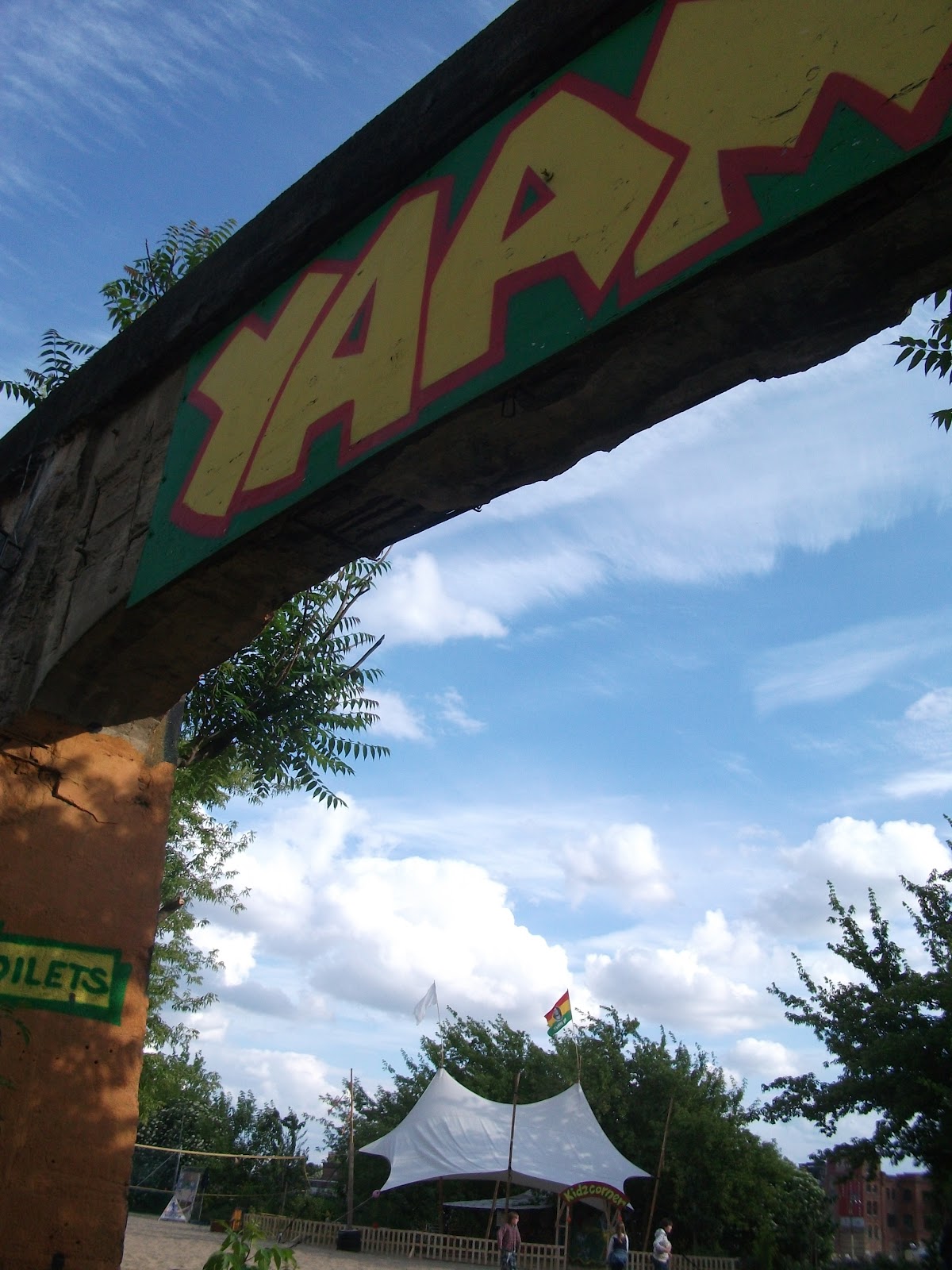
At the other end of the East Side Gallery, we decided to stop at Yaam's, a little slice of the Caribbean in the heart of East Berlin. The area is a river-side beach and contains a football pitch, DJ booth, beach bar, deckchairs, hammocks, a volleyball net, basketball courts and several snack stands selling delicious African and Caribbean dishes such as fried plantains and domoda, an extremely tasty kind of stew made from peanut butter. During the day, when we were there, the place had a laid-back vibe perfect for chilling in the sun, and apparently festivals, club nights and gigs are held there on occasions, which I'm sure would be worth their while.


As we also wanted to experience some of Berlin's more classical cultural attractions, we paid a visit to the Pergamon Museum, which almost everyone you ask will tell you is the must-see museum out of the four main ones on Museumsinsel (Altes, Neues, Bode and Pergamon). The highlights of the exhibits included the awe-inspiring Pergamon Altar which was discovered in Turkey by German archaeologists in the 19th century. Pergamon was an Ancient Greek city in Asia Minor and later became part of the Roman empire. The entire altar, an enormous construction, is on display here (minus a few missing chunks, but astonishingly intact in most places nonetheless) and depicts a battle of the gods against the giants in breathtaking detail. Further along you will also come to the Gate of Ishtar which was the gateway to one of the main walkways in the ancient city of Babylon, exotically decorated with blue tiles and mythical and real creatures. The museum is well worth a visit but you should definitely devote at least 3 hours to really explore all of its floors, which also include the Museum of Islamic Art.


Berlin is famous for its nightlife, and we spent Saturday night in the up-and-coming district of Kreuzberg, which, as every good guidebook will tell you, is the heart of  'underground Berlin.' Of course, once all the guidebooks start sending tourists to the top secret places, they instantly become uncool for locals... it's a vicious circle! We enjoyed our night in Kreuzberg, however, and it's certainly not just tourists who hang out here - not yet anyway! The area around Hermannplatz has some interesting bars, and drink prices are definitely budget-friendly - we were drinking bottles of Hamburg beer Astra for 2,10 € a pop.

So check out Berlin - you're sure not to be disappointed. And if you've already been, go back and delve a little deeper - explore one of the neighbourhoods away from the tourist centre and try to get to know the real Berlin if you can. The city is at its most beautiful in the summer sun (aren't all cities?) but as there are so many great museums and galleries to check out, rain doesn't need to completely spoil your plans. The Hamburger Bahnhof is a contemporary art gallery that I also thoroughly recommend, and a visit to the top of the government building is the perfect way to get a stunning panorama of the capital and discover more about the history of Berlin. What's more, the tour is free, as long as you book it in advance online (you have to register and submit your passport details for security reasons - but the hassle is well worth it as the visit is fascinating and offers spectacular views). Also check out the flea markets in Prenzlauer Berg or Mauerpark to the north on a Sunday afternoon. This lively yet relaxing, funky yet kitsch, historic yet modern city has something for everyone, and in my humble opinion is one of the most worthwhile capitals to visit in Europe.

Monday, 21 May 2012

10 Free Things to Do in London

One of the best things about London (and many other capital cities, in fact) is that there is always something going on - and more often than not, this includes free events! London may be a very expensive place to live, and probably seems even more expensive if you're just passing through as a tourist, but there are plenty of worthwhile activities which won't cost you a penny! Here's a few ideas to get you started:


1. Visit some of the world's top museums for free
This is a well-known fact, but always worth mentioning: London's national museums are almost all free (apart from special temporary exhibitions). Some of the best include the National Gallery on Trafalgar Square with its extensive collection of famous pieces from infamous artists such as Van Gogh, Reubens and Turner; the Natural History Museum for that nostalgic feeling of being on a school trip looking at dinosaur bones; the British Museum for incredible anthropological artefacts such as the Rosetta Stone, and the Tate Modern for sometimes-baffling modern art masterpieces which never fail to incite opinions.

2. Relax in acres of beautiful parkland
London may be one of the largest cities in the world, but it is also full of green spaces - from the vast expanse of Hampstead Heath to the rose gardens of Hyde Park. St. James' Park is full of wildlife, including pelicans and cheeky squirrels, and although just a stone's throw from Buckingham Palace, you'll feel like you're in the middle of the countryside as you stroll over one of the bridges, the city skyscrapers and double decker bus fumes another world away. Any visit to London should take you to one of the city's wonderful parks for a picnic or a short walk.

3. Go to a free street festival
Street festivals are part of London, especially in summer. This all comes to a head next month as Londoners take to the streets to celebrate the Queen's Diamond Jubilee, 60 years on the throne, in a wide range of events across London's parks and city squares. Hyde Park is putting on a huge family-friendly festival, and events will be held across the capital, including a river pageant along the Thames. The crowds will be in full strength and the atmosphere is sure to be euphoric, with Union Flags galore. Join in with the spirit and discover how friendly Londoners can be.


4. Visit the Houses of Parliament or climb Big Ben for free
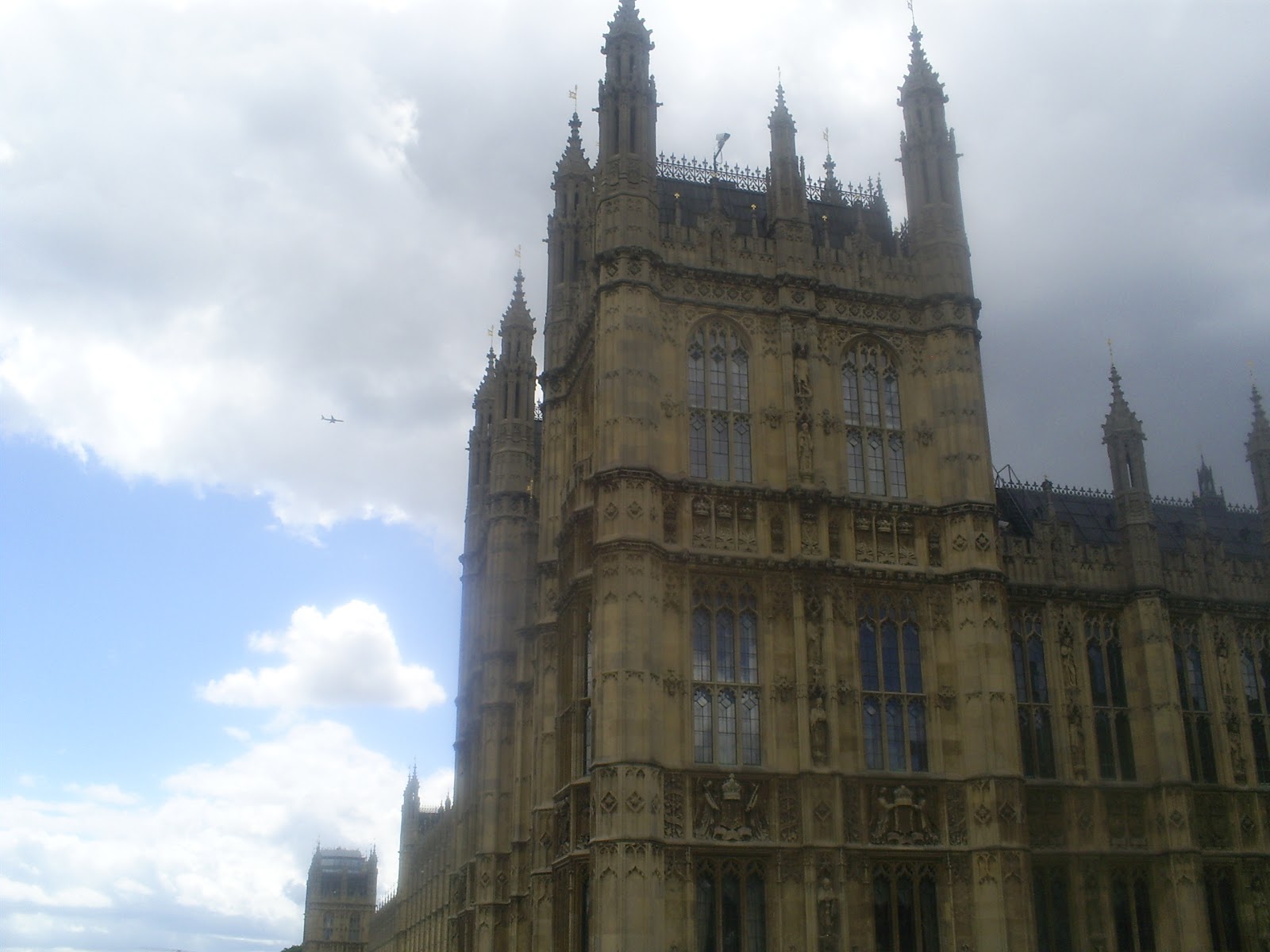
Yes, you can currently book a Clock tour of Big Ben for free, provided you are a UK resident and book well in advance. To organise the tour, you must contact your local MP or a member of the House of Lords. This is an amazing experience, as visitors will be led up to the tower to hear Big Ben chime the hour, enjoy breathtaking views of London and learn all about how the mechanism driving the clock works. You may also book a tour of the Houses of Parliament through your local MP - a must for anyone interested in politics, but again, make sure you book in plenty of time. A bit of forward planning is well worth it to go behind the scenes of the national parliament and a true London icon, though.

5. Get yourself an invite to watch a BBC Comedy Radio or TV show being filmed
Many BBC shows are recorded in front of a live studio audience, and as this is national broadcasting, tickets are often free. This is not only valid for London, but as the majority of BBC programmes are filmed or recorded here, you're more likely to find an interesting show to go and watch. Check out the BBC website for more information.

6. Don't miss London's street art
Banksy is one of the world's most famous street artists. Originally from Bristol, many of his works have cropped up in London over recent years, most recently an image of a child worker seemingly sewing a string of Jubilee bunting sprayed onto the side of Poundland in Mayfair. Maps of locations where Banksy has worked his magic can be found on the internet, such as this one. London is also full of statues, monuments and other outdoor sculptures, including moving exhibitions such as the famous 'Cow Parade' a few years ago. Details about current artwork to be seen can be found here.


7. Fill up on free samples at Borough Market
This popular artisan market is located in Southwark and takes place on Thursdays, Fridays and Saturdays. With international and UK produce, there's plenty to tempt your taste buds here, and many stalls offer free samples. Of course, your budget will probably stretch to a full-sized cup of steaming hot chocolate or a freshly-baked croissant if the samples are just too small!

8. Free live music at the Southbank Centre
On Friday evenings, the Southbank centre offers free concerts, as well as other free events throughout the year. For more information, visit www.southbankcentre.co.uk

9. Silver screen magic at the Portobello Film Festival
This free event was founded in 1996 and promotes independent film makers. Film buffs can attend film screenings absolutely free at various locations in Portobello and Notting Hill. The 2012 event has not yet been announced but will take place in August. Keep checking the website for more information.

10. Be at the Olympic Games without getting mixed up in ticket stress
How could I write about London without mentioning the Olympics? Everyone has heard about the near impossibility of buying a ticket for the Games, but it seems some of the events may still be viewed for free. For example, you can watch the road cycling along the Mall for free (although beating the crowds might be a slightly bigger problem). Some viewing areas are ticketed, but most of the route is free. The Olympic Marathon takes place on 5th (Women) and 13th (Men) August and also passes along the Mall. Unlike the London Marathon, this race only includes a handful of athletes, the best of the world's amateurs, so there'll be no novelty costumes - but spectators are not required to pay.

The brand new Olympic Stadium

Tuesday, 15 May 2012

What to do in Dresden?

Dresden is a tourist's dream - the Altstadt is packed with more Baroque wonders than you can shake a stick at, souvenir sellers a-plenty and, for backpackers 'doing Europe' in a summer, it's a two-hour train ride from Prague. This is certainly no 'best-kept secret' worthy of the New York Times' up-and-coming list like its lesser-known neighbour Leipzig, and it's also not as hipster-cool as nearby Berlin (is this such a bad thing?) but Dresden does have many different sides to it. The longer you take to explore the city connected by a river (the Elbe) to Hamburg, the more it will surprise you. There's more to Dresden than meets the eye.

Dresden Frauenkirche


The Altstadt may look ancient, but it was actually almost fully demolished during the Second World War (check out this series on the Guardian website for photos and more information on the devastation caused by Allied bombings). The beautiful Old Town was then painstakingly rebuilt (for the most part) by the new Soviet authorities. The Neustadt on the opposite side of the river is home to Dresden's trendier bars, pubs and clubs, and hosts an incredible street festival in summer. The BRN (Bunte Republik Neustadt) is a mish-mash of colourful craft stalls, food stands selling anything and everything, from exotic curries to good old German Bratwurst and, of course, beer, and live music fills the streets - anyone is allowed to perform, from little kids learning the trombone to cutting-edge unsigned bands and funky drumming troupes. The atmosphere is friendly, loud and welcoming - students living in the area join the party from their balconies, becoming self-styled DJs for the night, handing out (or selling - they are poor students after all) beers and having a good time. This year, the BRN takes place from 15th to 17th June 2012 (more information on the official website) and is really worth a visit.

BRN Festival 2011


What to do in Dresden when:


  • ...you're only there for a day

Start off in the Neustadt with a German-style breakfast in one of the pubs, cafes or bakeries (Planwirtschaft or Café Neustadt come highly recommended), then walk from the Neustadt train station along Antonstrasse to the River Elbe. Staying on the same side of the river, walk along the bank to the Albertbrücke bridge, where you'll cross the river into the Altstadt. This walk offers stunning views of the Old Town, and the grassy banks are a wonderful place for a picnic on sunny days. Once you've crossed the bridge, wander around the Altstadt, drinking in the wonderful buildings, from the Frauenkirche to the Zwinger and the Semperoper. If the weather's nice, stop for a drink on the Brühlsche Terrace overlooking the Elbe river. If there's no time for a sit-down lunch, grab a Bratwurst from one of the stalls in the Old Town for a typical German on-the-go snack. The afternoon can be spent in one of the many fine museums Dresden has to offer - those in the Old Town include the Albertinum, an excellent museum of contemporary artwork, the Old Masters Gallery in the Zwinger, in which you will find the famous Raphael painting, Sistine Madonna (the one with the two bored-looking angels at the bottom) or the stunning Grünes Gewölbe (the Green Vault) of Augustus the Strong, a rich and powerful ruler of Saxony in the 18th century who ordered the construction of many of the enchanting, decadent buildings of the Old Town and some of the surrounding palaces and castles. The Green Vault Museum boasts the largest collection of treasures in Europe, which all belonged to Augustus the Strong. Pieces including unimaginably intricately carved ivory eggs and priceless jewels from around the world. This museum is very popular and you should reserve tickets in advance; also not cheap at 10 € for adults, but if you're into Baroque interiors and impressive amounts of gold, silver and precious gems, this may be the place for you. Check the official website for opening times of the Dresden city museums; note that many are closed on Mondays.

If you have time for an evening meal, the Neustadt is probably your best bet; the Altstadt also has a square full of variously-themed pubs and restaurants known as the Weisse Gasse (White Street).


  • ...you're looking for a great night out
Again, the Neustadt really is the place to be for Dresden nightlife; all along Alaunstraße and the surrounding area, you'll find great bars such as Wohnzimmer and Lebowski - a tiny little place serving White Russians and many other cocktails, and playing the film 'The Big Lebowski' on loop on a big screen. Hebedas serves cheap drinks and offers DJ sets on certain nights, and Katy's Garage has a large beer garden with a grungy student club inside. Ostpol is an East German themed bar on Königsbrückestrasse with DDR (German Democratic Republic) style furniture which often has bands playing, and Rosie's is a dimly-lit pool and table football bar also popular with students. Stillbruch is a surreal bar where nothing is as it seems - Dali-style murals grace the walls, fake doors and barbed wire toilet seats (yes really) will confuse the more tipsy clientele, and there's even a 'gollard' table (a mixture of golf and billiards)! It really is best to wander around discovering places for yourself as more likely than not, you'll stumble upon a real gem here.

  • ...you want to get out of the city and explore the surrounding countryside

You don't even have to leave Dresden to feel closer to nature - just head to the extensive 'Großer Garten,' a large park to the south east of the city centre. Dresden locals picnic and barbecue on the lawns in front of the palace, stroll by the lake, cycle through the woods and even take the park's very own train - this miniature railway has smaller versions of a traditional steam train and a German high-speed 'ICE' train and kids love it! The Zoo and Botanical Garden are also within the grounds.

The grassy meadows separating the River Elbe from the residential area of Johannstadt to the east of Dresden are also a wonderful place to spend a hot summer's day. These areas are protected and cannot be built upon, so you can relax and feel far removed from the city hustle and bustle. In summer, films are screened outdoors in an area on the north bank, overlooking the Brühlsche Terrace. The Elberadweg (Elbe Cycle Route) follows the entire length of the River Elbe all the way from Bad Schandau on the German-Czech border to Hamburg (actually ending in the lesser-known town of Cuxhaven), an impressive 860 kilometres of well-cared for cycle paths. If you're not quite up for such a Herculean feat, the stretch between Dresden and the Czech border is a shorter yet lovely option. Even the twelve or so kilometres from Dresden to Pillnitz make an ideal day out - you can take the ferry across to visit the palace and its spectacular gardens once arrived in Pillnitz. Many inviting beer gardens line the route, offering refreshment and a jolly atmosphere to weary cyclists. One of the best is at Schillerplatz by the Blue Wonder - a blue-painted bridge just to the east of Dresden. Here you can sample a local Feldschlösschen beer (try saying that once you've had a few!) as well as German beer garden classics which mainly involve a lot of meat, potatoes and salt (clearly a recipe for success!)


Hikers should not miss Saxon Switzerland, a stunning area of natural beauty extremely popular with walkers near the Czech border. The impressive rock formations are known as the Elbe Sandstone Mountains, and include incredible towers of rock which are very popular with local climbers. Tours can also be taken by bus but beware the narrow, winding lanes which may turn even the strongest stomach! Particularly noteworthy are the Bastei Bridge (see photo below) and Königstein Castle, an impressively well-situated fortress atop a steep cliff, which will be popular with history fans. Countless walks take you past some of the best views Germany has to offer, and tour operators even offer guided walks if you're not sure about setting out on your own with a map and a compass.
Basteibrücke


Thursday, 15 March 2012

Leipzig

Mein Leipzig lob' ich mir! Es ist ein klein Paris und bildet seine Leute. (Oh wonderful Leipzig! Like a little Paris, she cultivates her people) - Quote from Faust Part One by Goethe


My first real post is all about Leipzig, the city I have been living in for 10 months now. Leipzig is located in the east of Germany in the federal state of Saxony with around 500,000 inhabitants, and was named 10th on the New York Times' list of places to go back in 2010, much to the locals' pride. So what did the New York Times see in the city? The main points mentioned were the city's famous residents, who include Bach, Schumann and Mendelssohn. Goethe, who I have quoted above, also set part of his novel Faust in the Auerbach Keller in the city. Somewhat overshadowed on the tourist radar by its neighbour and the capital of Saxony, Dresden, Leipzig is nevertheless very much worth a visit: here are some of my tips.


1. Retrace the steps of the Friedliche Revolution (Peaceful Revolution)
Leipzig was where it all began; a few months before the GDR (German Democratic Republic or East Germany) collapsed, people began expressing their discontent in a series of peaceful marches and prayers originating from the Nikolaikirche in the city centre. The movement gained momentum over the next few months and turned into the Monday Demonstrations. Spreading all across East Germany, these demonstrations and marches eventually pressured the Communist totalitarian government into submission following a mass march on 16th October where 120,000 people took part; the following week, over 300,000 showed up and the demonstrations only ended when the first free elections were held in the GDR, eventually resulting in German reunification. A fascinating subject, and a tangible piece of history of which many traces still remain in Leipzig today. Anyone interested in finding out more can follow a route around the city to the important sites of the marches and other events crucial to reunification; information boards are located on these sites and provide a unique way to explore the city and delve into its recent history.


2. Chill out in one of Leipzig's many parks 
Clara-Zetkin-Park, Johannapark, Rosental, Wildpark and Cospudner See are all wonderful places to spend a hot summer's day. Cospudner See is a large lake to the south of Leipzig, and Leipzigers flock here in summer to swim, hang out on the beach (yes, it's a beach) and barbecue. Germans love to barbecue (who doesn't?) and as soon as the sun comes out, you'll spot trails of smoke from parks and balconies across the city and smell the delicious scent of cooking Bratwurst. The Wildpark is also to the south and is a large wooded area where many wild animals live; for example, you might see a wild boar ambling along, totally oblivious to passers' by.


3. Head to the Spinnerei to check out Leipzig's arty credentials for yourself
The Spinnerei in Plagwitz, one of Leipzig's up-and-coming studenty areas, was once a textile factory and now houses art galleries and a hostel. Leipzig has an incredible amount of art galleries and some real gems can be found in tiny, independent art galleries in places such as Lindenau, Plagwitz and the Südvorstadt. Shortly after arriving, I took part in Lindenow, a weekend where many of these small ateliers and studios were open to the public; Leipzig often has such events where you can meet young artists and see their work for yourselves.


4. Sample some Leipziger Gose at the Bayerischer Bahnhof
This restaurant, as the name suggests, is located within the old train station on Bayerischer Platz in the south west of Leipzig, not far from the centre. It is also a working brewery producing and serving its own beer, amongst them Leipziger Gose. This beer has a slightly sour yet pleasant, refreshing taste, and is often ordered with a shot of syrup to sweeten it up. The food served here is typically German in a good way - 'Brauhaus' or brewery specialities involving lots of meat and potato dishes typical to the region (and many typical of Bayern as well) and is sure to go down well with the boys, particularly for the range of beer on offer.


5. Catch Happy Hour on Karli
Karli, or Karl-Liebknecht-Strasse, is Leipzig's famous bar-lined street to the south and THE place to go for a drink in the city. Particularly great in summer, where all the bars have outdoor seating and happy hours (usually from 6pm - 8pm) with extensive cocktail menus. Most themes are represented, from an American sports bar and, of course, the ubiquitous Irish pub (Killiwilly's - brilliant name!) to a Spanish bar and more traditionally German places. 


6. Marvel over the stunning architecture of Leipzig
This really is one of my favourite things about Leipzig. Much of the city is full of Gründerzeit buildings from the 19th century. Other personal favourites include the newly-finished university building designed to resemble a church on Augustusplatz, the fairytale castle-like Neues Rathaus and the awe-inspiring Bundesverwaltungsgericht (housing the federal law courts). There is also something beautiful yet sad about all the empty houses in certain parts of the city, relics from the migration to the West after the Wall fell in 1990.